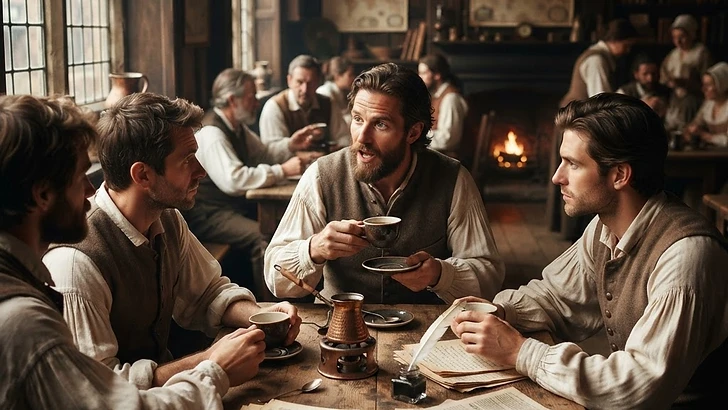
Long before the modern cafe culture we enjoy here in Centerville, the coffee house served as the beating heart of the Enlightenment. In the narrow, smoke-filled streets of 17th-century London, these establishments were not merely places to drink; they were the nurseries of modern democracy.
The Arrival of the Penny University
In 1652, Pasqua Rosée, a Greek servant, opened London's first coffee house in St. Michael's Alley. It was a radical departure from the standard alehouses of the time, which served beer from dawn until dusk. As the historian Markman Ellis notes, these coffee houses were dubbed 'Penny Universities.' For the price of a penny—the cost of a cup of strong, black coffee—a patron could spend hours reading newsletters, listening to the latest lectures, and debating the news of the day with scholars, merchants, and sailors alike. Unlike the alcohol-drenched atmosphere of the taverns, which often ended in brawls and blurred judgment, the coffee house demanded a sharp, caffeinated wit. It was an egalitarian space where, in theory, a man's social standing mattered less than his ability to hold his own in an argument.
The Engine of Commerce and Science
The influence of these houses extended far beyond intellectual banter. Edward Lloyd opened his famous coffee house on Lombard Street in the late 1680s, serving as a hub for shipping agents and merchants. It was here, amidst the steam of roasting beans and the clatter of porcelain, that Lloyd’s of London was born. Merchants realized that by centralizing their information regarding ships, cargo, and insurance premiums, they could mitigate risk far more effectively than through fragmented meetings. Similarly, the Royal Society found its early intellectual footing in these spaces. Scientists gathered to discuss the nuances of the new microscopic discoveries or the latest advancements in navigation, turning coffee houses into the laboratories of the modern age.
The Political Crucible
As coffee became more embedded in the cultural fabric, it inevitably became a target for political authorities who feared the unrest that clear-headed debate might foment. In 1675, King Charles II issued a proclamation attempting to suppress coffee houses, fearing that they were 'hotbeds of sedition' where disaffected citizens hatched plots against the crown. The backlash was immediate and fierce. The public, now addicted to both the drink and the atmosphere of liberty, rallied in defense of their meeting places. The authorities were forced to back down, marking one of the first instances where a public demand for open discourse overcame royal decree. Coffee, once a luxury of the Levant, had become a symbol of the rights of the common man to gather and critique the state.
A Legacy of Connection
By the end of the 18th century, the landscape of London changed, and many of the original coffee houses evolved into private social clubs or dissolved into history. Yet, the blueprint they created remained. These spaces taught humanity that coffee could fuel more than just a morning routine; it could fuel collective thought. When we sit here at House Blend Cafe today, looking out at the autumn leaves in Centerville, we are participating in a tradition that spans centuries. We have inherited the spirit of the 'Penny University,' where the boundaries between different walks of life blur, and the shared experience of a good cup of coffee encourages us to slow down, engage with our neighbors, and perhaps, solve a problem or two along the way.