History· 4 min read
The Forgotten Women Who Built the Global Coffee Industry
Discover the pivotal, often overlooked contributions of women throughout history who shaped coffee from a local plant into a global commodity.
House Blend Cafe· 2026-10-17
Discover the pivotal, often overlooked contributions of women throughout history who shaped coffee from a local plant into a global commodity.
We're a seasonal shop, open Saturdays only.
You'll find us at the counter on Saturdays, from just after Labor Day through the Saturday before Christmas, 10 AM to 2 PM. The rest of the year we're closed. Order ahead and we'll have it waiting, or see hours and location.
When we trace the history of coffee, the narrative often focuses on explorers, traders, and large-scale agricultural magnates. Yet, if we look closer at the labor, cultivation, and social consumption of coffee, a different story emerges: one where women have acted as the backbone of the industry for centuries. From the initial processing of cherries to the preservation of café culture, women have been indispensable architects of the global coffee trade. It is time to spotlight their vital, often overlooked, contributions.
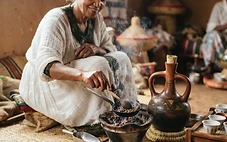
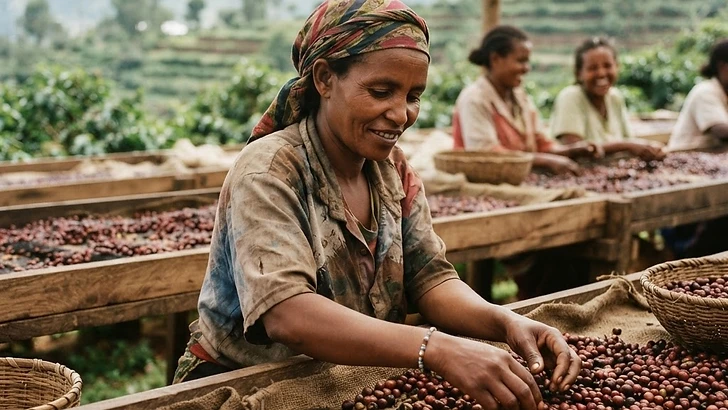
Historically, the agricultural side of coffee was heavily reliant on the labor of women, particularly in the regions where coffee first gained prominence. In traditional Ethiopian and Yemeni settings, while men were often associated with the trade and transport of coffee, the daily management of trees and the intricate, labor-intensive process of sun-drying were largely overseen by women. These women developed the foundational techniques for sorting and processing that defined the early quality standards of Arabica beans. Their intimate knowledge of the plant's health and the timing of the harvest served as the original quality control system.
As coffee moved into Europe and the Middle East, it sparked the rise of the 'coffee house.' While these spaces were initially portrayed as male-only domains, that is a historical simplification. In 17th-century London and Paris, women often managed these establishments, acting as the proprietors who kept the businesses running smoothly. They were the bridge between the exotic, imported bean and the local customer, ensuring the 'coffee house' became a stable fixture of society. In some instances, they even served as the first professional 'baristas,' managing the intense pressure of brewing hundreds of cups daily for a growing, inquisitive public.
During the 19th and early 20th centuries, as coffee became a massive global commodity, the role of women in the supply chain deepened. In Central and South America, women were essential to the scaling of production. During the harvest seasons, women made up a significant portion of the workforce, performing the delicate task of hand-picking. This was not merely manual labor; it was a skill. Identifying perfectly ripe cherries while ignoring under-ripe or damaged ones is a high-skill requirement that directly dictates the final price of the coffee. Without the precision of these laborers, the quality of coffee beans would never have reached the consistency required for international export.
Today, the narrative is shifting from labor to leadership. In many coffee-producing nations, women are increasingly taking on roles as agronomists, exporters, and coffee cooperative managers. Organizations like the International Women’s Coffee Alliance (IWCA) have worked tirelessly to highlight the obstacles women face—such as limited access to credit and land ownership—and have helped turn the tide. By empowering female producers, the industry has seen a rise in specialty-grade microlots, as these leaders invest heavily in sustainable agricultural practices and social programs that benefit their entire communities.
Acknowledging the role of women isn't just about historical accuracy; it is about the future of coffee sustainability. Much of the labor force in the coffee belt is female, yet they are historically the least supported in terms of financial and educational resources. By recognizing their historical and ongoing importance, the industry can better align resources to support those who are truly responsible for the quality of the coffee in our cups.
As you enjoy your next cup of coffee, consider the hands that shaped the journey of those beans. From the ancient slopes of Ethiopia to the modern farms of Central America and the bustling cafes of today, women have been, and remain, an essential pillar of the coffee industry. Their legacy is not found in the boardrooms of the past, but in the enduring quality and accessibility of the brew we all cherish today.