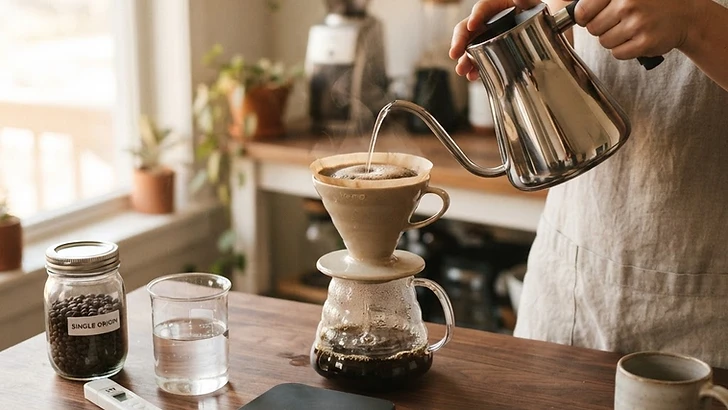
Why Your Water Matters More Than You Think
When we talk about brewing the perfect cup, we obsess over bean origin, roast date, and grind size. Yet, we often overlook the most significant ingredient: water. Since a cup of coffee is approximately 98% to 99% water, the chemical makeup of what flows from your tap has a profound impact on how those volatile aromatics and flavor compounds are extracted from the bean. If your water isn't optimized, even the most expensive geisha coffee can taste dull or bitter.
The Mineral Component: Magnesium and Calcium
Water is a solvent. When hot water hits ground coffee, it acts like a magnet, pulling out sugars, acids, and bitter compounds. The minerals dissolved in your water determine how effectively this process occurs.
Magnesium and Flavor
Magnesium is a coffee lover's best friend. It acts as a powerful agent for pulling out berry-like, floral, and vibrant fruity notes. If you've ever wondered why your local cafe's brew tastes more 'alive' than your morning pour-over, the water chemistry—likely rich in magnesium—is often the answer.
Calcium and Texture
Calcium adds a heavier, creamier mouthfeel to coffee. While it contributes to a pleasant weight on the palate, too much calcium can lead to an over-extracted taste that obscures the nuances of the bean, often resulting in a muddy or chalky profile.
The Negative Impact of Bicarbonate
While minerals pull flavors out, bicarbonates act as a buffer. In excess, they neutralize the naturally occurring acids in coffee that provide its bright, distinct character. If your coffee tastes flat, soapy, or dull, you likely have high alkalinity in your local water source, which is silencing the coffee's potential.
Filtration and Your Brewing Setup
Not all water filtration systems are created equal. A standard carbon filter, like those found in most refrigerator pitchers, is excellent for removing chlorine and sediment, which are essential for removing off-flavors. However, they do not significantly alter the mineral content or total dissolved solids (TDS).
If you live in an area with 'hard' water—water high in calcium carbonate—you might notice white buildup in your kettle. This is a sign that your water is too mineral-dense, which can cause 'channelling' and uneven extraction. For the home enthusiast, utilizing a dedicated water filtration system or even brewing with distilled water fortified with specific mineral packets can provide a consistent baseline that brings out the best in your favorite single-origin roast.
The Role of pH Balance
The ideal pH for brewing coffee is generally neutral to slightly alkaline. When the water is too acidic, it can emphasize the harsher notes of the roast, while overly basic water can feel viscous or muted. Most municipal water systems are treated to stay within a safe range, but seasonal changes and aging infrastructure can fluctuate these levels, which is why testing your local water quality with a simple digital meter can be a revelation.
Key Takeaways
- Water makes up 99% of your coffee, making it the most important ingredient.
- Magnesium promotes bright, vibrant, and fruity notes in the cup.
- High bicarbonate levels can 'flatten' the acidity of your coffee, making it taste dull.
- Chlorine must be removed to avoid chemical off-notes, but don't strip all minerals.
- Experiment with bottled spring water or mineral-optimized water to see if your coffee's flavor profile improves.
Conclusion: Elevate Your Home Brewing
Improving your coffee experience doesn't always require a new grinder or a fancy brewer. Sometimes, it starts at the sink. By paying attention to the chemistry of the water you use—aiming for low-to-moderate mineral content and neutralizing chlorine—you open the door to a much cleaner, more expressive cup of coffee. Start by testing your water, experiment with a different source for a week, and you might find that the 'secret' to your favorite cafe's brew was hiding in plain sight all along.