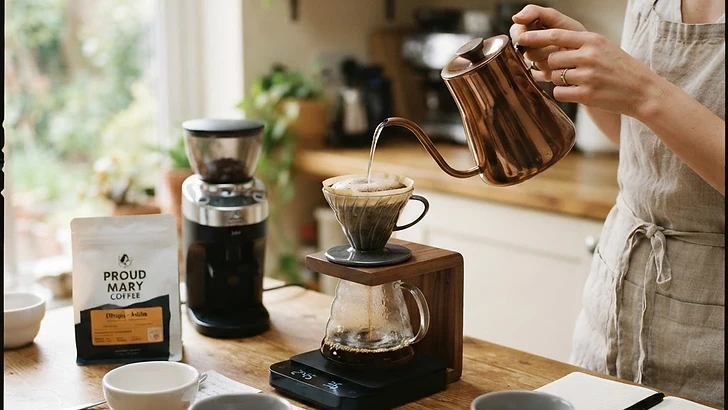
There is something uniquely special about sharing a high-quality cup of coffee, but taking that experience to the next level by hosting your own 'cupping' session can turn a routine morning into an unforgettable social event. Whether you are a seasoned enthusiast or just curious about how your favorite beans from House Blend Cafe compare, a structured home tasting allows you to explore flavor profiles in a fun, accessible way.
Preparation And Equipment
To host a successful session, you do not need expensive laboratory glassware. You only need a few basic items you likely already have in your kitchen. First, gather three to four different bags of coffee—variety is key here, so try to pick a light roast, a medium roast, and maybe a single-origin bean to provide contrast. You will need one clear mug or bowl for each person for every coffee being tasted, a tablespoon for slurping, a kettle for heating water, and a notepad. Lay everything out on a clean table, ensuring you have enough napkins for potential spills. The goal is a neutral environment, so clear away any strong-smelling items like flowers or heavy cleaners that might interfere with your sense of smell.
Step One The Dry Aroma
Begin by grinding each of your coffee selections to a medium-coarse consistency, similar to sea salt. Place the grounds into your mugs. Before adding any water, take a moment to smell the dry grounds in each cup. This is known as the 'fragrance.' Lean in, take a deep breath, and jot down what you notice. Is it nutty? Do you catch hints of chocolate, citrus, or perhaps something floral? Don't worry about being 'right'—the most important part of a tasting is describing what you perceive in your own words.
Step Two Pouring And Crust Breaking
Next, pour hot water—ideally just off the boil—directly onto the grounds in each mug. You want to fill them almost to the top. Allow the coffee to sit undisturbed for exactly four minutes. As it sits, a 'crust' of grounds will form at the surface. After the time is up, take your spoon and gently break the crust by pushing it downward and stirring the top. As you break the crust, bring your nose close to the mug to capture the 'aroma,' which is often quite different from the dry fragrance. This release of gases is one of the most sensory-rich moments of the entire experience.
Step Three The Slurp And Taste
Once the crust is broken, use your spoon to skim off any remaining foam or floating grounds from the surface. Now comes the fun part: the tasting. Dip your spoon into the liquid, lift a small amount, and 'slurp' it forcefully into your mouth. This action helps atomize the liquid, spreading the coffee across your palate to reach all your taste buds. Note the acidity—does it make your mouth water like a lemon? Consider the body—does it feel thin like tea or heavy like whole milk? Finally, think about the finish: does the flavor linger after you swallow, or does it disappear quickly?
Common Mistakes To Avoid
Even in a casual home setting, a few common pitfalls can hinder the experience. First, avoid using water that is boiling directly from the kettle, as it can scald the grounds and extract bitter, unpleasant flavors; let it sit for a minute off the heat first. Second, don't feel pressured to use 'professional' terminology; if the coffee tastes like your grandmother's pie or a morning in a pine forest, use those descriptors. Finally, do not rush. The flavor of coffee changes as it cools, and you might notice sweet notes appearing in a cup that tasted bitter when it was piping hot.
Key takeaways
- Use a variety of roasts to make the tasting more interesting and educational.
- Always break the crust with a spoon to release the full aromatic potential.
- Use a vigorous slurp to distribute the liquid evenly across your palate.
- Keep a notepad handy to track how flavors evolve as the coffee cools.
- Don't worry about being an expert; focus on your own personal flavor associations.