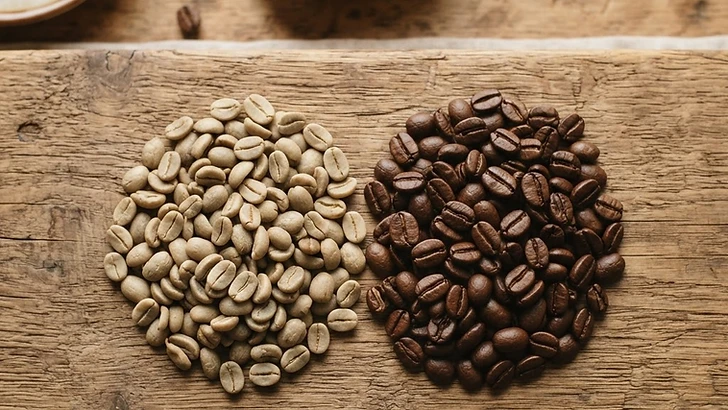
Walk into any coffee shop and you'll likely see a sign boasting "100% Arabica." But what does that actually mean — and is Arabica always better? The answer depends on what you want from your cup.
The two main species
Nearly all the coffee you'll ever drink comes from one of two species: Coffea arabica and Coffea canephora, known as Robusta. They differ in almost every way that matters.
Arabica: the flavor favorite
Arabica makes up about 60–70% of global production. It grows at higher altitudes (usually above 3,000 feet) in cooler, more delicate conditions, which makes it harder and more expensive to farm. The payoff is a smoother, more aromatic cup with bright acidity and complex notes — think fruit, florals, chocolate, or nuts. Most specialty coffee is Arabica.
Robusta: the strong, bitter workhorse
Robusta, as the name suggests, is a tougher plant. It grows at lower altitudes and warmer temperatures, resists pests better, and yields more per acre. Its beans are roughly twice as high in caffeine as Arabica, and the flavor is bolder, more bitter, and earthier, with less acidity and a heavier body.
Which belongs where
- Arabica shines in pour-overs, drip, and lighter roasts where its nuance can show.
- Robusta is a star in Italian espresso blends, where its crema, body, and bitterness balance milk drinks — and the extra caffeine gives a stronger kick.
- Instant coffee and many commercial blends lean heavily on Robusta because it's cheaper.
Key takeaways
- Arabica is smoother, more aromatic, and pricier; Robusta is bolder, more bitter, and higher in caffeine.
- Arabica prefers high altitudes; Robusta is hardier and easier to grow.
- Specialty coffee is almost always Arabica; classic espresso blends often blend the two.
- Neither is universally "better" — it depends on the drink and your taste.
The best cups often come from knowing what each species brings to the table — and sometimes, from blending both.