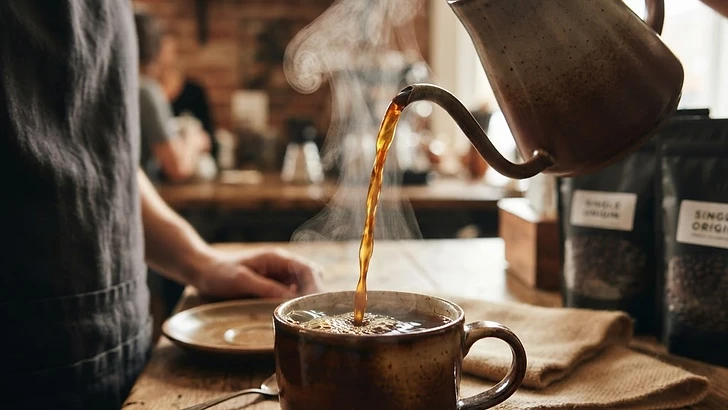
Walk into any cafe in Centerville on a crisp November morning, and you are bound to hear someone ask for the darkest roast on the menu, specifically because they want the strongest jolt of caffeine to wake them up. It is a deeply held belief that the deeper the color of the bean, the more powerful the kick, but this common assumption actually gets the chemistry of coffee exactly backward.
The Origin of the Dark Roast Myth
The persistent belief that dark roasts possess more caffeine stems from sensory perception. Dark roast coffee beans are oily, bold, and carry a pronounced bitterness that people often interpret as 'strength.' Because these beans have a more intense, smoky flavor profile compared to their lighter, brighter counterparts, our brains naturally associate that intensity with a higher concentration of stimulants. Marketing has also played a role; for decades, labels claiming 'extra bold' or 'intense' roasts have subconsciously reinforced the idea that if the coffee tastes punchy, the caffeine levels must be sky-high.
What Actually Happens Inside the Roaster
To understand the reality, we have to look at what happens during the roasting process. When coffee beans go through the heat of the roaster, they lose moisture and their physical volume actually expands. If you roast a bean for a longer duration to achieve a 'French' or 'Italian' roast, that bean becomes less dense than it was when it started. However, the caffeine molecule itself is remarkably stable and heat-resistant. While some mass is lost in the bean due to evaporation, the absolute amount of caffeine inside the bean remains essentially constant throughout the entire roast cycle. Because a dark roast bean is lighter and less dense than a light roast bean, if you measure by volume (like using a standard kitchen scoop), the light roast will technically have more beans in the scoop, and therefore, more caffeine.
Why Weight Matters More Than Color
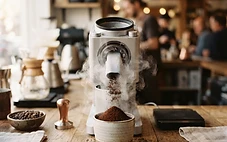
The confusion truly clears up when you switch from measuring by volume to measuring by weight. Coffee professionals always weigh their beans for a reason. If you weigh out 20 grams of light roast coffee and 20 grams of dark roast coffee, the caffeine content is virtually identical. The 'strength' you perceive in a dark roast is entirely a matter of flavor profile and roast development—the breakdown of plant fibers and the creation of Maillard reaction compounds—rather than a difference in stimulant content. Essentially, you are trading off the nuanced floral and acidic notes found in light roasts for the caramelized, bitter, and chocolatey notes of dark roasts, but the caffeine content remains a bystander in that trade-off.
Navigating Your Next Cup
So, how should you choose your next bag of beans at House Blend Cafe? Stop looking at the color of the roast to determine your morning energy levels and start looking at your brewing method and ratio. If you need a consistent caffeine boost, use a digital scale to weigh your grounds regardless of whether you pick a bright Ethiopian light roast or a deep, oily Sumatra dark roast. The roast level should be a choice dictated by your palate and your preference for acidity versus sweetness, not by your need for a wake-up call. If you truly want to maximize your caffeine intake, focus on the total amount of ground coffee used in your brew ratio, rather than the darkness of the bean.
Key takeaways
- Caffeine is heat-stable and does not increase as coffee beans roast longer.
- Dark roast beans are less dense, so a scoop of dark roast contains fewer beans by weight than a scoop of light roast.
- For the most accurate caffeine dosing, always use a scale to weigh your coffee grounds rather than relying on volume-based scoops.
- The perception of 'stronger' coffee from dark roasts is purely about flavor intensity and bitterness, not caffeine concentration.
- Choose your roast based on the flavor notes you enjoy, knowing the caffeine will remain consistent across all roast levels when measured by mass.